

If you have been looking into cybersecurity jobs that don’t require coding, you have probably seen the title ISSO over and over. Government contractors post these roles constantly, the pay is strong, and many people move into them from non-technical careers. But the job ads rarely explain what an ISSO actually does all day.
This guide answers that question in plain English: what an ISSO is, what a typical week looks like, the skills and certifications employers ask for, and a realistic path to landing your first ISSO role.
An ISSO (Information Systems Security Officer) is the person responsible for keeping a specific information system secure and compliant over its whole life. Think of a home inspector who doesn’t just inspect a house once, but stays assigned to it: checking that the locks still work, documenting every renovation, and making sure the house keeps passing inspection year after year.
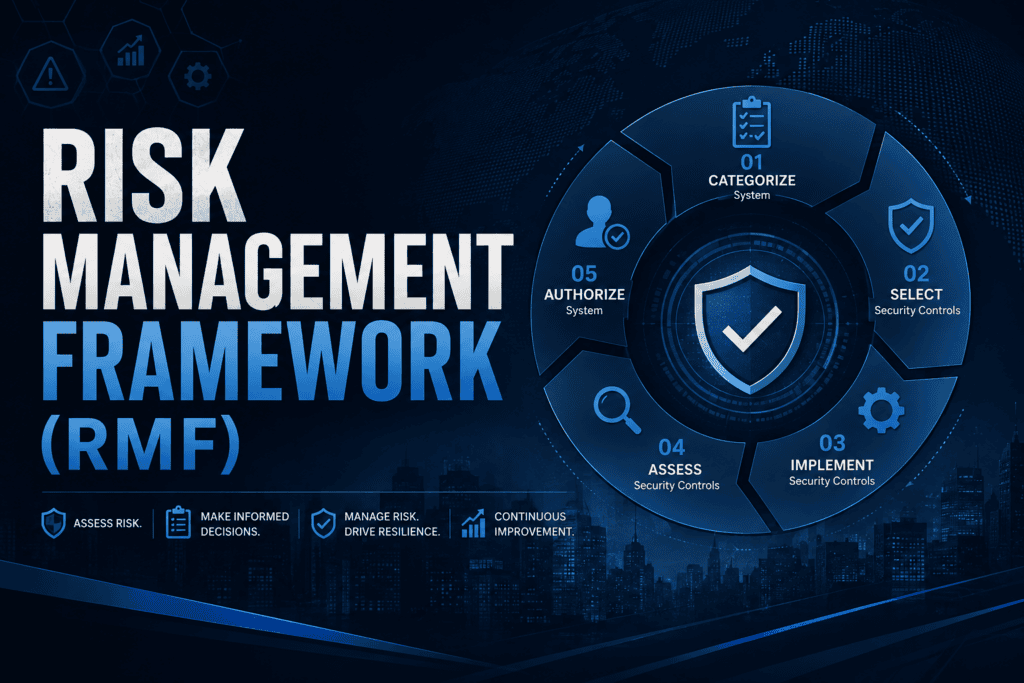
Most ISSO roles are in the U.S. federal space, at government agencies and the contractors that support them. There, every system must follow the NIST Risk Management Framework (RMF) before it is allowed to operate. The ISSO is the day-to-day owner of that process for their system.
ISSOs usually report to an ISSM (Information Systems Security Manager), who oversees several systems and ISSOs. Above them sits the Authorizing Official (AO), the senior leader who formally accepts the risk and approves the system to run.
Real ISSO job postings list very similar duties. Here are the ones you will see most often, and what they mean in practice.
Before a federal system can go live, it needs an Authorization to Operate (ATO). The ISSO prepares and updates the documents that support it. The centerpiece is the System Security Plan (SSP), which describes the system, its boundary and how each required security control is implemented. Other common documents include the contingency plan, incident response plan and privacy assessments.
When scans or assessments find problems, the ISSO records them in a POA&M (Plan of Action and Milestones), works with engineers to fix them, and tracks each item until it is closed. You don’t patch the server yourself; you make sure the right people do, on time, with evidence.
Any hardware, software or configuration change can affect the system’s security. ISSOs coordinate these changes with the ISSM and AO and perform a Security Impact Analysis to decide whether the change is safe and whether documentation needs updating.
Getting an ATO is not the finish line. ISSOs review audit logs, check vulnerability scan results, confirm security settings are still in place, and run periodic compliance reviews. This is the “Monitor” step of the RMF, and it is where ISSOs spend much of their time once a system is live.
When something goes wrong, the ISSO helps coordinate the response and documents what happened. They also prepare evidence for auditors and assessors, and make sure users complete required security awareness training.
Every contract is different, but a normal week often looks something like this:
Notice what is missing: writing code. The job is about understanding controls, communicating clearly with technical teams, and keeping accurate documentation. That is why people from nursing, finance, administration, the military and other non-IT backgrounds often do well in it.
The NIST RMF has seven steps, and the ISSO touches every one of them:
If you understand these steps well enough to explain them in an interview and show documents you have written for each, you are already ahead of most entry-level applicants.
Entry-level ISSO postings tend to ask for a mix of the following:
Pay is strong. As one example, a recent posting from a large defense contractor for an ISSO II role listed a range of roughly $93,000 to $126,000 a year. Actual pay varies widely with location, clearance level and experience.
The biggest hurdle for career changers is the “experience” line in job ads. Here is a practical path that addresses it directly:
For more on breaking in from a non-technical background, read our guide on how to start a career in cybersecurity without coding.
Our Risk Management Framework (RMF) course is built around the ISSO job. Across 12 modules you work through every RMF step with hands-on labs: registering a system, writing privacy assessments, FIPS 199 categorization, SSP authoring, vulnerability scan review, contingency and incident response planning, POA&M management, and assembling an authorization package. It ends with a capstone authorization defense and mock interview, so you finish with a portfolio you can show employers.
The course is completely free to start.
No. The ISSO role focuses on security controls, documentation, risk and coordination. Technical understanding helps, but coding is not part of the day-to-day job.
An ISSO handles the security of one or a few specific systems day to day. An ISSM manages the overall security program, supervises ISSOs and is usually a more senior role.
It is one of the more accessible paths into cybersecurity for career changers, especially for people with strong writing and organizational skills. Junior and assistant ISSO roles exist specifically for people early in their careers.
It depends on your background and how much time you can commit. With focused, hands-on RMF training and Security+, many career changers are ready to apply for junior roles within a few months.